The biggest myth about travel planning is that Japan is unaffordable. This concern keeps countless people from booking their dream vacation. We took exactly this trip. 15 days across Japan, from late September to mid-October. We didn’t skimp on anything, ate superbly, and stayed in high-quality accommodations. Here, we’re laying out our complete expenses. No extreme backpacker hacks, just real, transparent figures for quality-conscious travelers.
The biggest expense: Flights to Japan
The flight price is a major factor in determining how expensive your Japan vacation will be. We departed from our home airport, Frankfurt am Main. Our itinerary was an open-jaw flight with Asiana Airlines in Economy Class. The outbound flight went via Seoul to Osaka, with a travel time of 14 hours and 20 minutes. The return flight departed from Tokyo, again with a stopover in Seoul, and from there directly back to Frankfurt. We paid exactly 1,337 euros per person for these three flights. We booked 10 months in advance. Use tools like Google Flights or Momondo* and track prices over several weeks to get a feel for the market. Important for your planning: You don’t need a visa for Japan in advance. Upon arrival, you’ll receive a 90-day tourist visa completely free of charge.
Accommodations: Plenty of space for little money
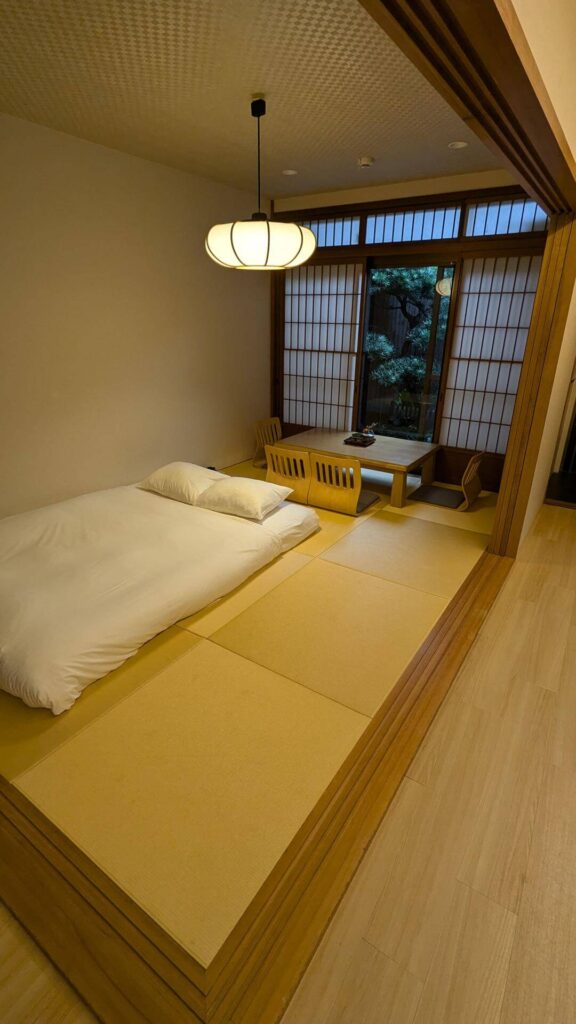
We spent 15 nights in Japan and booked all our accommodations through Airbnb. It’s also worth checking out Booking.com* or Agoda*(especially extensive selection in Asia). The strategy behind this: more space and your own facilities. In Osaka, we stayed for five nights at 231 euros per person. In Kyoto, we spent five nights in a traditional ryokan for 271 euros per person. We wrapped up our trip with five nights in a modern apartment complex in Tokyo for 340 euros per person. For 15 nights, we paid an average of just 112 euros per night as a couple. In exchange, we didn’t have tiny hotel rooms, but rather large, fully furnished apartments . The biggest strategic advantage was having our own washing machine, which drastically cuts your luggage in half on a trip lasting several weeks. By comparison: You can often find good 3- to 4-star hotels in Japan starting at 80 euros a night, while the luxury segment in the 5-star category starts at around 200 euros.
Infrastructure and Local Transportation
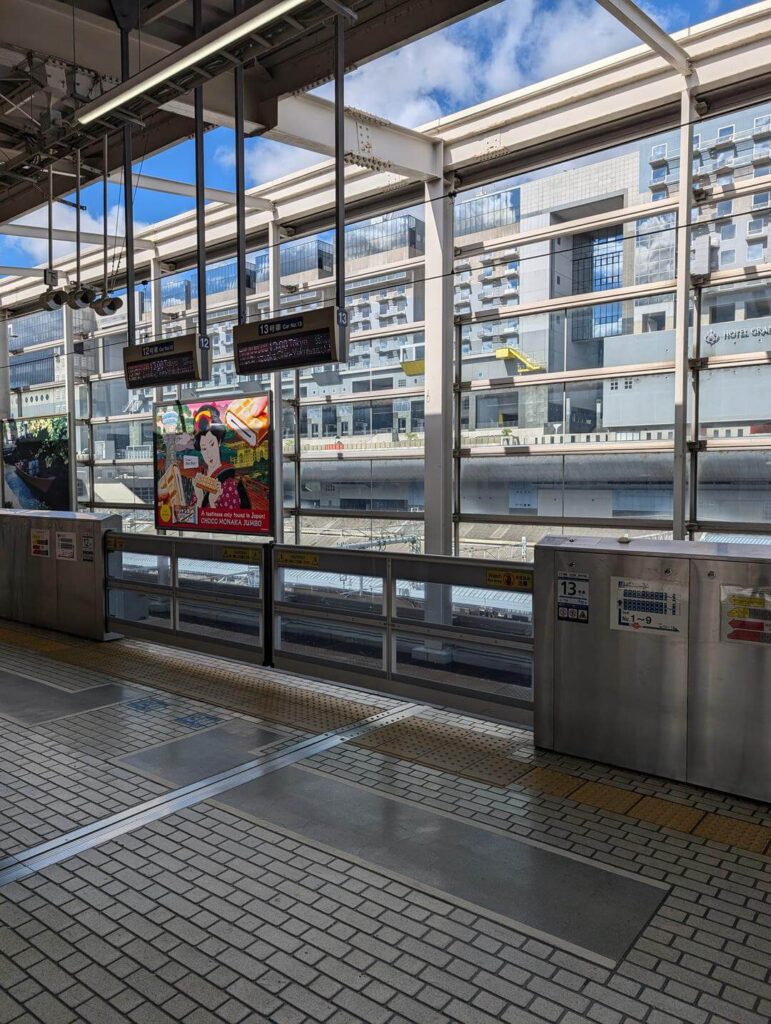
Anyone traveling to Japan inevitably reads about the “JR Pass,” the flat-rate pass for Japan’s trains. Our clear retrospective analysis: stay away from it. After the massive price hike, this pass almost never pays off for a standard 14-day trip. Our solution was significantly more efficient: the ICOCA Prepaid IC Card*. You load it up and use it to pay for almost all trains, subways, and buses across the country by simply holding it up to the turnstiles. Local transportation costs in Japan are surprisingly low. A subway ride in Osaka costs about 2 euros depending on the route, and the train ride from Osaka to Kyoto is only 3.40 euros. For the long distance from Kyoto to Tokyo, we took the legendary Shinkansen bullet train. We bought the tickets a month in advance through the official “Smart Ex” website. The price was 70 euros per person.
Food: From Konbini to Wagyu Beef
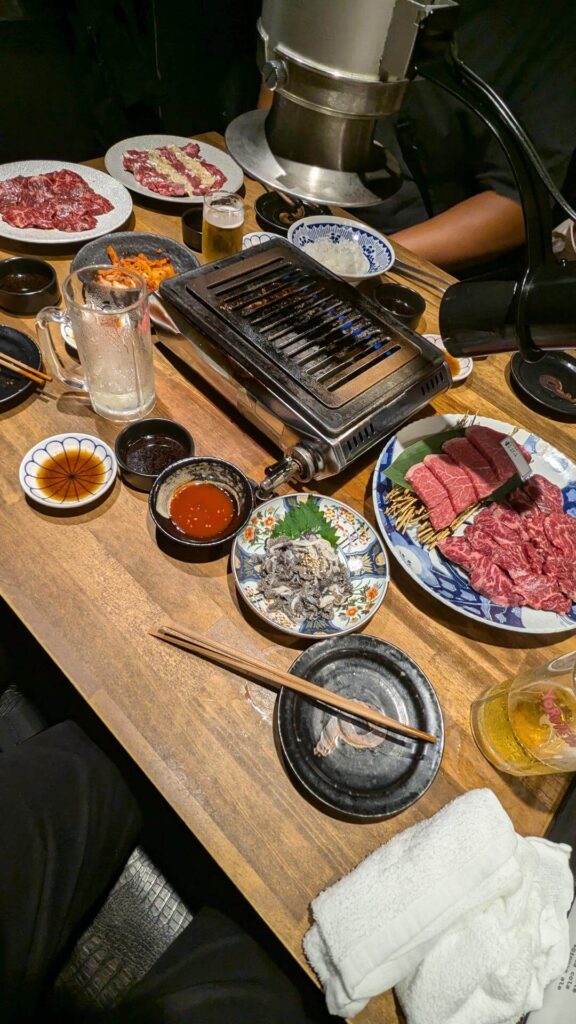
High-quality food is extremely affordable in Japan. On many days, we got our meals from convenience stores, the so-called konbinis like 7-Eleven. A fresh bento box costs between 2.50 and 5.00 euros here. A cup of Boss coffee from the vending machine is available for a mere 50 cents. But even dining out is easy on your wallet. Our absolute highlight was a yakiniku restaurant in Osaka. We cooked excellent Wagyu beef on the tabletop grill, ordered a full spread, and kept ordering drinks. The bill came to 35 euros per person for what was perhaps the best meat of our lives.
Sightseeing, Activities, and Internet
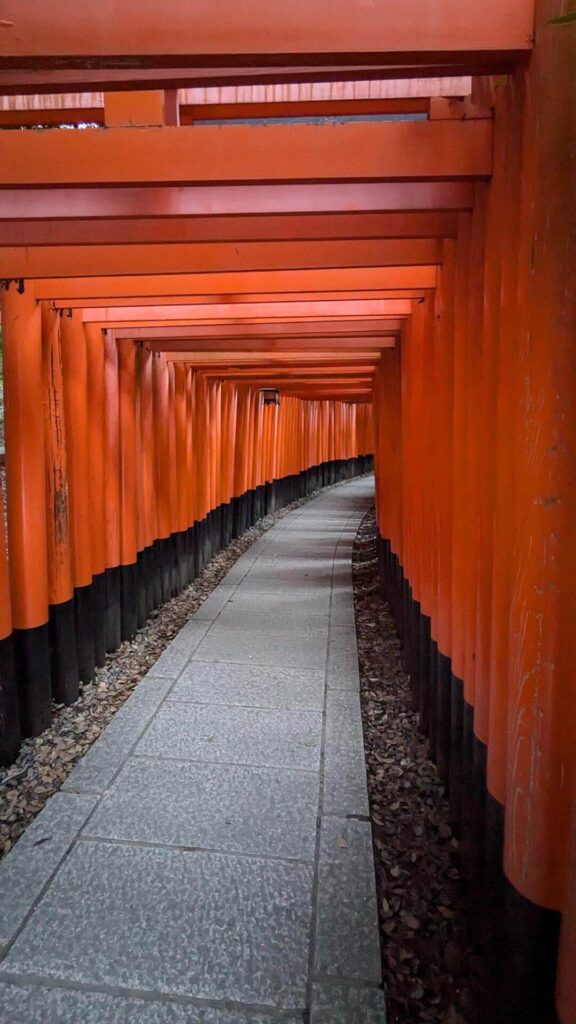
Japan offers an incredible contrast between tradition and modernity. Many of the absolute top attractions are completely free. You won’t pay a cent for admission to the Arashiyama Bamboo Forest in Kyoto, the Fushimi Inari-Taisha Shrine, or Nara Park. Major temples like Katsuō-ji near Osaka or the Golden Pavilion in Kyoto cost just a modest 2.70 euros for admission. The Harukas 300 observation deck in Osaka* costs 11 euros, the Tokyo Skytree 17 euros, and the immersive TeamLab Planets museum runs 21 euros. By far our most expensive expense was the visit to Universal Studios in Osaka*. The day pass plus Express Pass cost us 184 euros per person for one day. Without this pass, you’ll wait in line for over an hour at top attractions; with it, you go straight through. For internet access , we booked an eSIM with 30 gigabytes of data* for 20 days in advance through Klook , at a cost of 35 euros. I simply set up a hotspot for my partner. We paid for almost everything on-site cashless using the completely free C24 debit card* and the easybank credit card* as a backup.
Your total budget
Japan is a very affordable travel destination with a low cost of living. You’ll also benefit greatly from the Japanese yen’s historic low, which is weaker than it has been in 25 years. The only things that make the trip expensive are the long flight and the travel duration, which is usually 14 days. For a high-quality trip where you don’t have to sacrifice any amenities, you should plan on a total budget of about 3,000 to 4,000 euros per person.